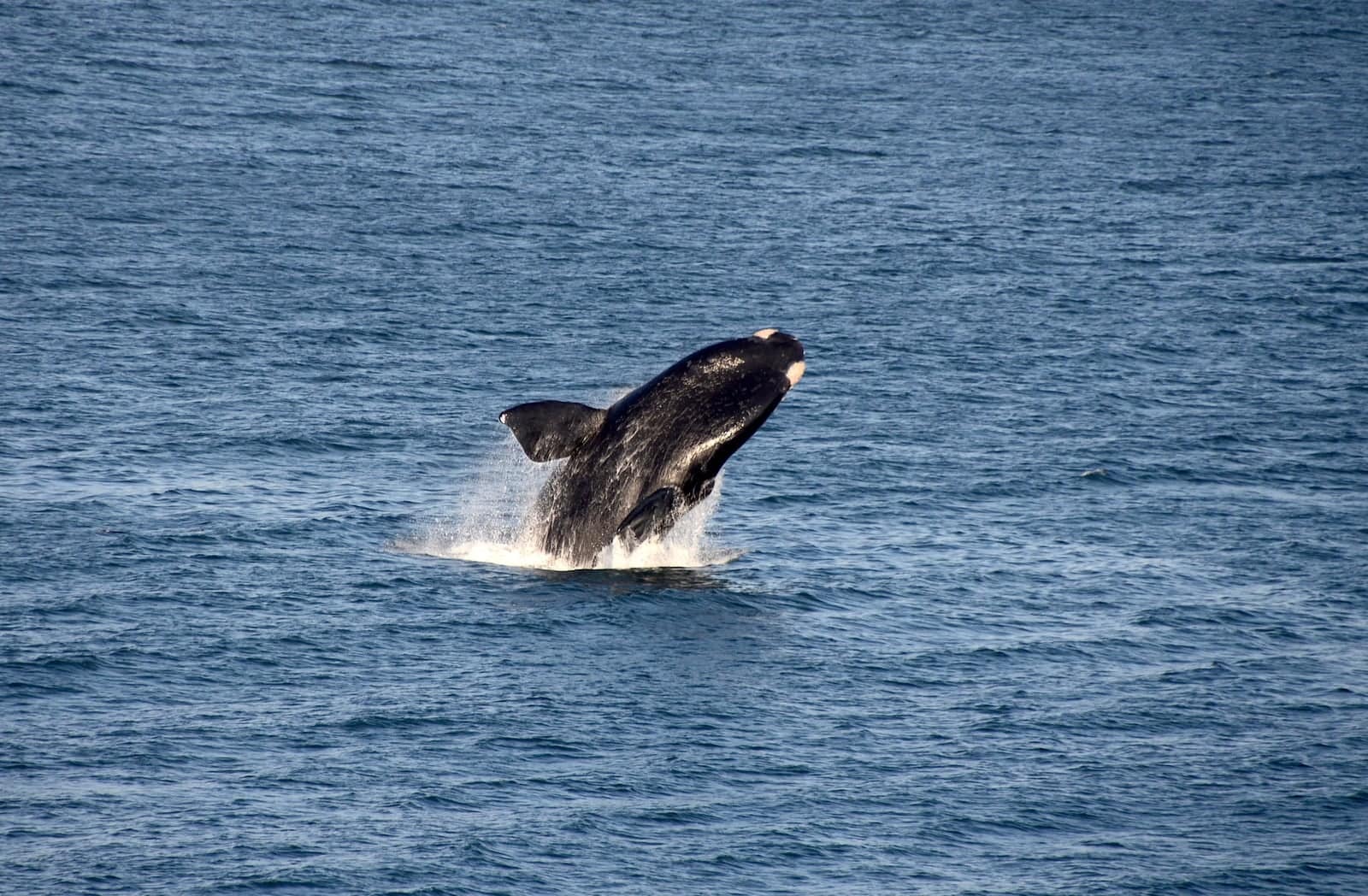
Every year, southern right whales come into the sheltered water of False Bay to calve and nurse their young. From about June to November, you can often see them from the shore, without getting on a boat. Most guides focus on Simon's Town and Hermanus, but the eastern side of the bay, right on our doorstep, has some excellent lookouts.
When is whale season in False Bay?
Southern right whales are usually seen from about June to November, and sightings are often best from September onwards. Humpback and Bryde's whales are also seen in the bay, and dolphins can turn up at any time of year.
Clarence Drive
The best land-based whale watching near Strand is along Clarence Drive (R44), between Gordon's Bay and Rooi-Els. The road runs high above the sea, and there are plenty of lay-bys where you can pull over safely and scan the water. The whales aren't usually as close as in Hermanus, but the views across the bay are spectacular. See our Clarence Drive guide for the stops.
Kogel Bay and Gordon's Bay
At Kogel Bay, whales come close inshore in season, and sightings from the beach are common between about September and December. In Gordon's Bay, walk out along the harbour or the beachfront and look across the bay on a calm morning.
From Strand Beach
On a calm day, you can sometimes spot whales from Strand Beach and the promenade, 15 minutes' walk from Green Gables. Look for the spout, a V-shaped blow, then the dark back and the tail.
Boat-based whale watching
For a closer look, licensed boat-based whale watching trips leave from Simon's Town, on the other side of False Bay. Boats must keep their distance from the whales, and only permitted operators can approach them, so book with a licensed company.
Hermanus
If whales are the main reason for your trip, Hermanus is around an hour and a quarter from Strand. Drive there along Clarence Drive and the coast, and come back over Sir Lowry's Pass for a loop. In Hermanus, whales often come within metres of the cliffs.
Tips for spotting whales
Choose a calm, clear day, when blows and splashes are easy to see. Mornings are often best, before the wind picks up. Bring binoculars, a warm layer and a flask of coffee, and be patient: scan slowly, and watch for splashes from breaching and tail-slapping.